

QATAR CHILDREN’S SCIENCE CONGRESS (QCSC)
Qatar children’s Science Congress’ offer platform to students display their scientific skills. Students will be given opportunity to create a science project based on the main theme and a sub-theme and present them to scientific committee for evaluation. The best projects/students will be selected and awarded. The theme for each year shall be announced in advance. Sub-theme may have choices to choose. To participate please register below. Eligibility: Students studying in grade 6 and above
QCSC ORIENTATION recording is available in Download section
GUIDELINES: Listen to the Podcast Below
NEW REPORT FORMAT: for QCSC project submission
GUIDELINES: Simplified in a video
QCSC Guide Video
| Key Date | Details | Mode / Method |
|---|---|---|
| Sept 19, 2026 | Last date of Registration | Website |
| Sept 18, 2026 | Orientation for students and guide teachers | Online Starting 9 am. Check email for link. |
| Sept 26, 2026 | Round 0 – Results | via email |
| Oct 3, 2026 | Round 0 – Resubmission DEADLINE | Online – Details via email |
| Sept 30, 2026 | Round 1 – Report Submission START | Online – through Google Classroom. |
| Oct 17, 2026 | Round 1: Report Submission DEADLINE | Online – through Google Classroom. |
| Oct 30, 2026 | Round 1: Project Review & Feedback | Face to Face. Venue: TBD |
| Nov 1, 2026 | Round 2: Report Submission START | Online – through same Google Classroom used in Round 1 |
| Nov 28, 2026 | Round 2: Report Submission DEADLINE | Online – through same Google Classroom used in Round 1 |
| Dec 11, 2026 | Round 2: Project Review & Elimination | Face to Face. Venue: TBD |
| TBD | Final Round |
Round 0
Project Qualification
At the time of registration each team shall submit the project tile and synopsis.
The project title/synopsis will be evaluated and ONLY qualified projects will be allowed to participate in QCSC.
The disqualified team shall be given another chance to rework/improve/change their title/synopsis and submit before deadline. These projects shall be evaluated again for qualification.
The results of qualification shall be notified via email. Continuously check our website for updates.
Round 1
Feed back
The teams shall submit report via online before the deadline.
The teams shall prepare report as per ‘QCSC Report Template’.
The teams shall receive a feedback about their project. This shall be via video conferencing or face-face meeting.
Round 2
Elimination Round
The teams shall complete the project at this stage.
The teams shall submit report via online portal before the deadline.
The teams shall prepare report as per ‘QCSC Report Template’.
Face/Face evaluation shall be conducted.
Round 3
Finals
The qualified teams shall present their projects.
The teams should carry their project report in the format as mentioned in the ‘QCSC Report Template’.
Functional projects should be in working condition. Non functional project must have a complete model.
Winner shall be selected.
A student dashboard is added to our website. Team leader can login and change registration details if needed. This dashboard will be active untill registration deadline.
The QCSC evaluation structed has been improved to add value and prepare students to become a great researcher.
New report writing templet has been introduced. Please refer to our website for ‘QCSC Report Template‘
The team shall prepare their final report as per the ‘QCSC Report Template‘. Any deviation in following the template shall lead to project disqualification.
New measures have been introduced to ensure ONLY competitive teams/projects shall be allowed to participate in the competition.
A feedback Round is introduced to allow students an opportunity to enhance their project work to produce efficient results.
Project ppt presentation shall not carry weightage.
The depth of your report and the quality of data from your experiment/model shall carry more weightage.
All teams must submit their final report in the format detailed in ‘QCSC Report Template‘
GUIDELINES
A team should have only Two-Child Scientists.
Age criteria as on 31st Dec. of the previous year. Minimum is 10 years
A team of Two-Child Scientists carry out the research project based on the theme/sub-themes as per guidelines under the guidance of teacher/expert/scientist.
Parents cannot serve as guides for the project.
Orientation training by experts shall be arranged by SIFQ for the students and guides.
Projects shall be evaluated at multiple levels.
The top 2 teams from each category shall be announced as winners.
The best 2 teams in each category will qualify to participate at the IISF (India International Science Festival) to be held in India.
The nominated team members should travel to India. The travel expenses (air tickets) will have to be borne by the parent of the Child Scientists. Local logistics, accommodation, and food will be arranged by SIF.
QCSC is open to children from all nationalities. Only IISF nominations are limited to Indian Nationals.
All email communication shall be sent to primary Communication email provided at the time of registration
QCSC 2026-27 Main Theme / Sub-Theme details below.
Main Theme: “Theme: Science and Innovation for Sustainability” Focus: To encourage children to apply scientific methods to understand problems around them and develop sustainable solutions.
Aim: Foster scientific temperament, inquiry-based learning, and innovative thinking to solve real-life challenges affecting individuals, communities, and the environment.
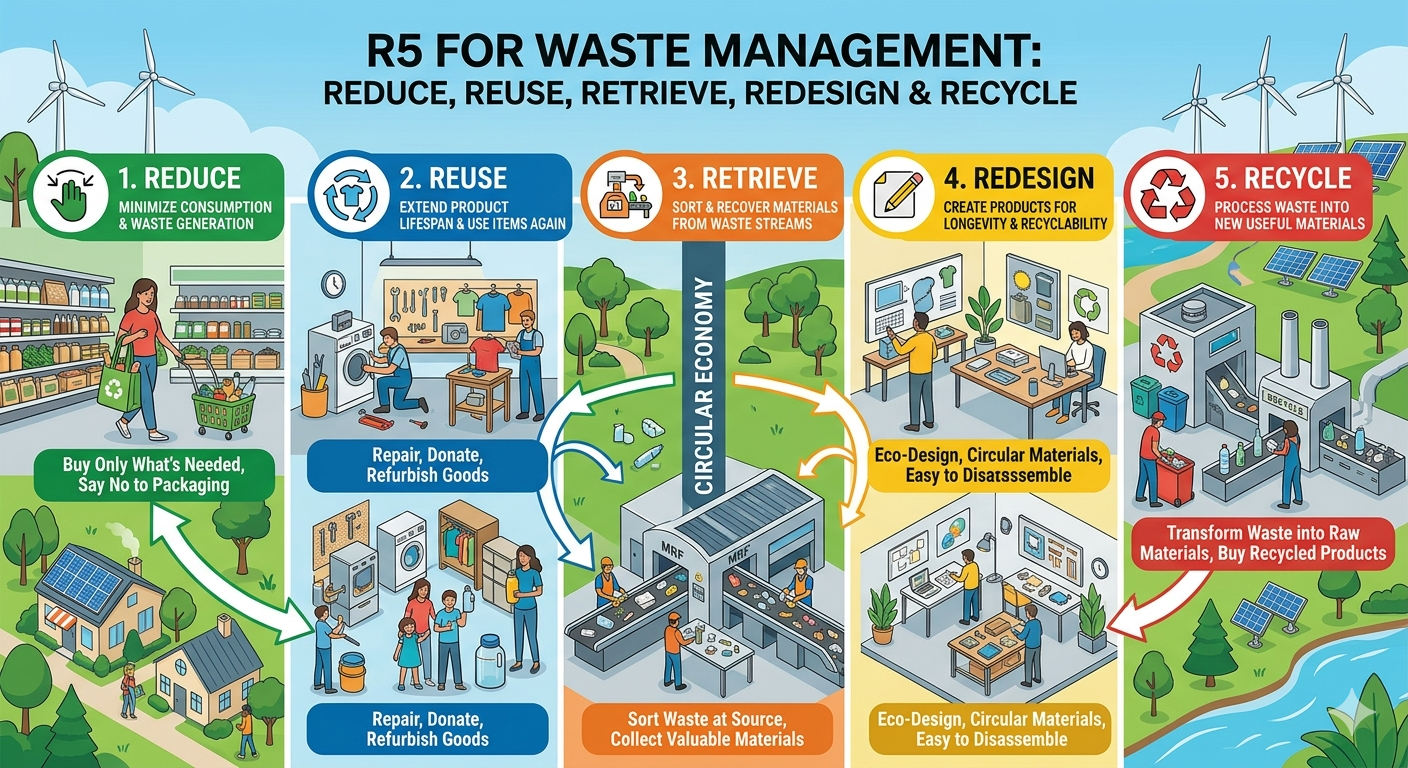
>> Sub-theme 1: “R5 for Waste Management: Reduce, Reuse, Retrieve, Redesign & Recycle“
Urbanization, industrialization, and irrational consumption have led to a multifold increase in waste generation. The proposed R5 approach offers sustainable, smart solutions. We must Reduce what we use effectively, Reuse items efficiently whenever and wherever possible, Retrieve useful materials from waste, Redesign products for longer use, and Recycle materials to create new ones. Each step helps to save available resources, protect the climate, and the environment. Through the R5 approach, we learn that waste is not the end-it’s the beginning of a sustainable cycle.
Some interesting areas to investigate.
>> Organic fertilizer from biodegradable waste and studying its effect on plant growth.
>> Developing eco-friendly materials from natural sources like banana fiber, rice husk, or corn starch.
>> Electronic waste disposals & suggesting safe disposal methods.
>> Designing strategies for schools/ shops/ hospitals where waste is minimized and managed scientifically.
>> Studying how products can move in a continuous loop of use and reuse instead of ending up in a landfill.
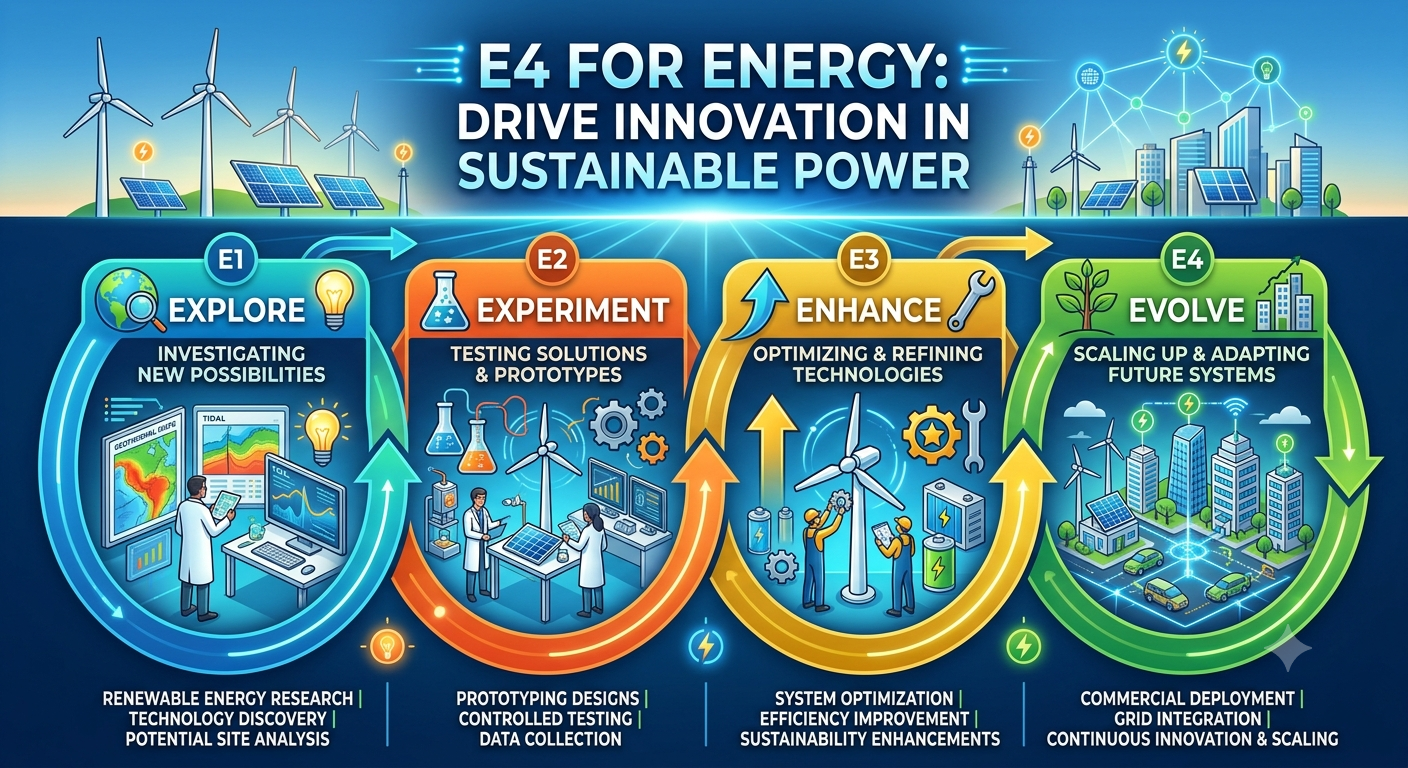
>> Sub-theme 2: “E4 for Energy: Explore, Experiment, Enhance & Evolve“
Energy empowers our lives-from electricity to transport-but most energy sources harm the planet, Therefore the E4 model encourages students to Explore different energy forms, Experiment with clean sources like solar, wind, tidal, geothermal etc. Enhance energy efficiency, and Evolve towards greener technologies with innovative thinking, the young generation can help shape a future powered by clean, smart, and sustainable energy.
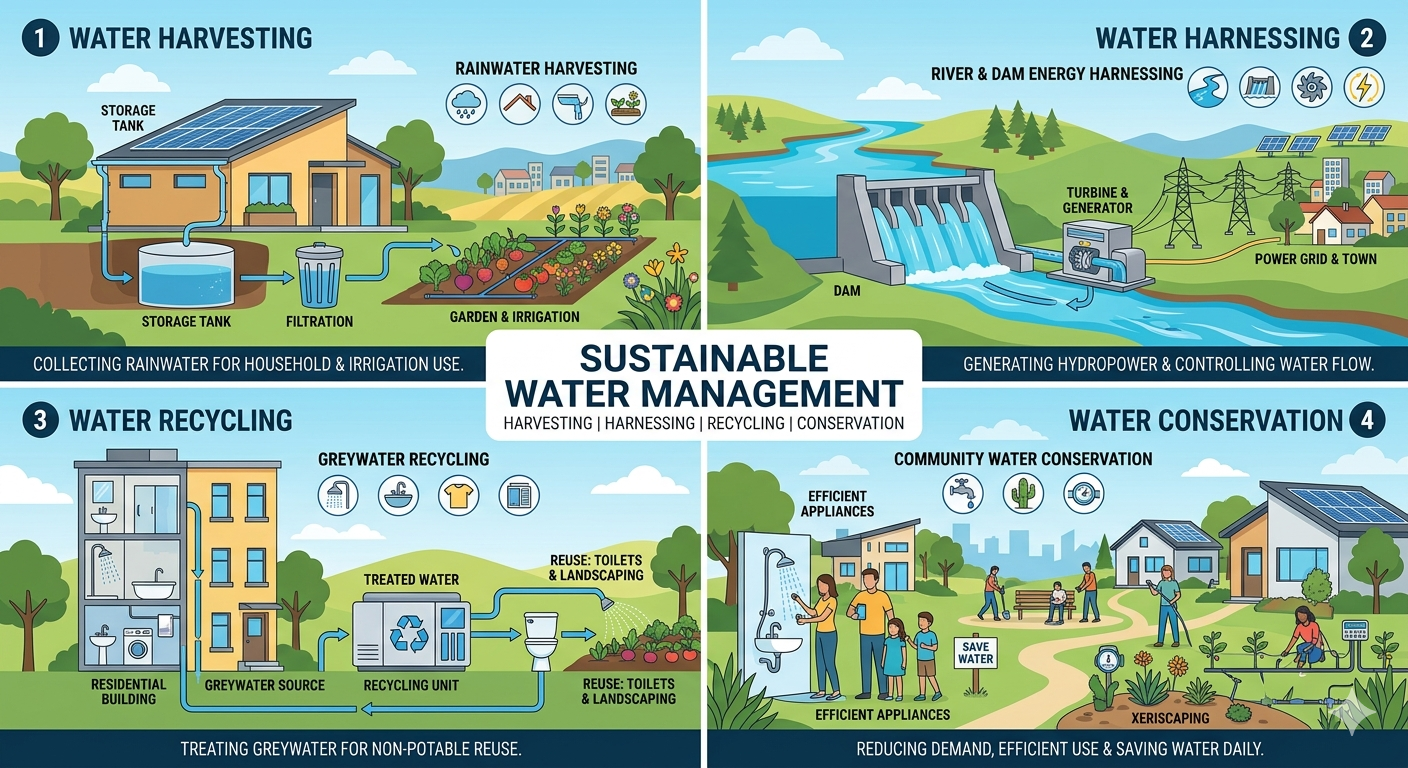
>> Sub-theme 3: “Water: Harvesting, Harnessing, Recycling & Conservation“
The life on Earth is not possible without water, but due to the growing global population and climate change, water shortage has become a serious issue. The theme highlights the need to Harvest rainwater, Harness water resources wisely, Recycle used water, and Conserve 12 every single drop. Understanding the natural water cycle helps us respect and protect it. By managing water responsibly, we ensure health, food security, and balance for both people and
the planet.
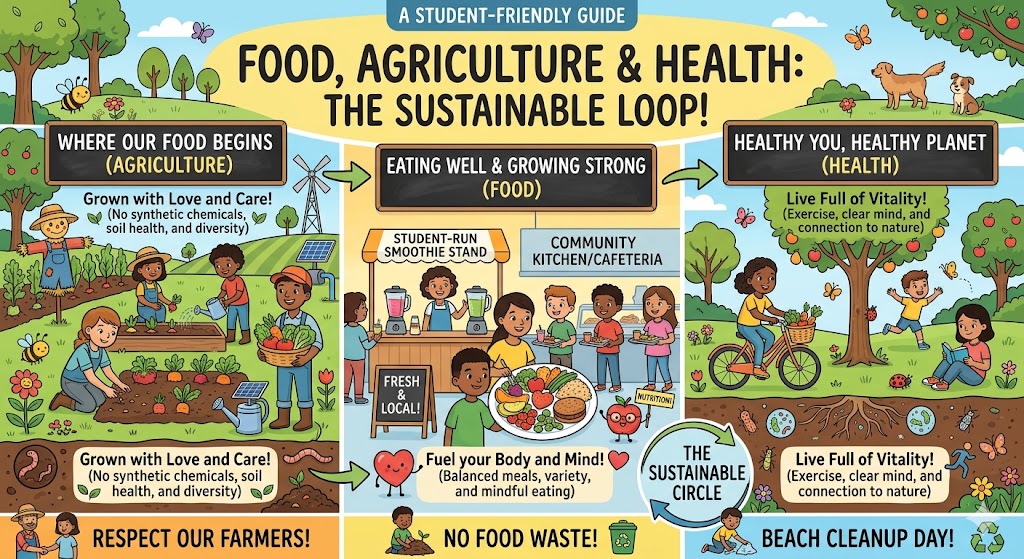
>> Sub-theme 4: “Food, Agriculture & Health“
Food is fundamental to health. Good Food…Good Health. Sustainable agriculture involves growing food without damaging soil, water, or biodiversity and choosing local, seasonal, and chemical-free foods support both farmers and health. Therefore, it is important to understand the association between agriculture, ecology, and health, to make healthy choices for the people and planet.
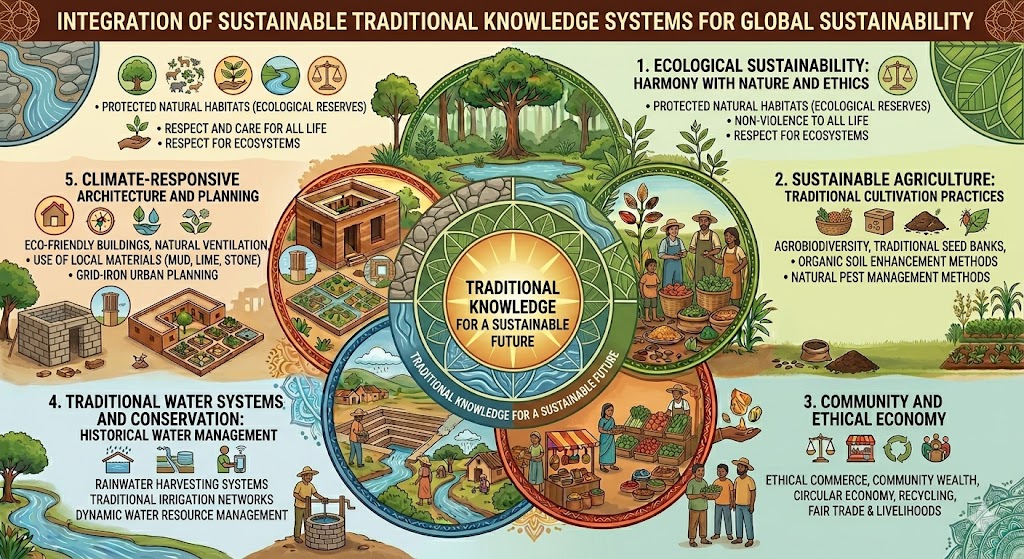
>> Sub-theme 5: “Application of Indian Knowledge Systems for Sustainability“
India offers timeless lessons on sustainable living. Practices like water harvesting systems, organic farming, irrigation practices, and architecture based on nature’s rhythm show harmony with the environment. These knowledge Systems teach balance, respect for resources, and interconnectedness of life. Students can explore local traditions-like using neem for health, terracotta for cooling, and calendar for agriculture-to see how science, art and culture blend beautifully. Reviving these eco-friendly methods helps us rediscover sustainable living.
Frequently Asked Questions
Who is eligible to participate ?
Active students studying in grade 6 and above
What should I do if the Team Leader QID is wrong?
Contact SIF team.
Can we change sub-theme?
Before registration deadline you can change sub-theme. Login into student dashboard using team leader QID and you can do necessary changes
Round 1 and Round 2. Is it necessary to bring the model?
Presenting the model in Round 2 is mandatory. In Round 1 it is optional.
When should we submit the report?
Repots mut be submitted before deadline. Please visit our website for deadline date.
Which are the rounds in Google Classroom?
Round 1 and Round 2 are via Google Classroom
Can I change the project title or synopsis?
Before registration deadline project title can be changed by logging into student dashboard.
After deadline;
>> If you received ‘ACCEPTED email you cannot change.
>> If you receive ‘ON HOLD’ email, follow the instructions in the email and you can change.
What is a logbook?
It will have information about the points of discussion on that particular day. The date of discussion, members involved and signature of guidebook. Its should NOT contain project data.
What is the format of logbook?
Date, members participating, points of discussion, signed by guide teacher.
What is the Importance of logbook?
It is mandatory to maintain a logbook and should be presented during face-face review or when requested.
Can we take inspiration from past projects?
Yes, you can. But make sure you include them in the acknowledgement section in your report.
When is the re-submission deadline?
Please visit our website for dates.
How we will enroll in Google Classroom?
After receiving ‘ACCEPTED’ email follow instruction in email to join Google Classroom.
Should the report be physical or online
We recommend preparing the report using word documents in your computer and uploading it to Google Classroom.
The Report submitted in Round 2 can be printed and presented in Finals.
Can we do projects without working models?
Yes, it is called non-function projects.
Can we make ppt for the project report?
Report is mandatory. Ppt is not a replacement for reports.
Can we prepare the report in Google Doc?
Yes, you can. Please make sure you upload the same in the google doc and submit.
What do the winners get?
The winners will be declared as ‘Winner of QCSC’ for that year and will be felicitated in our annual Gala.
In addition, they will get a chance to participate in Indian International Science Festival (IISF) Interactive with top scientists mainly from ISRO, DRDO, CSIR, etc.